
The Concept of Inherited Fear

One of the defining characteristics of the modern Black experience is a phenomenon I have come to call Inherited Fear. In this context, Inherited Fear refers to a deeply embedded fear formed not through direct personal experience, but through exposure to the experiences of others. Throughout human history, this type of fear has functioned as a survival mechanism. Few people need to be mauled by a bear to understand the danger of one; observation, warning, and collective memory are often enough.

Despite what the term may suggest, Inherited Fear is not genetic. It does not pass through DNA, but through environment. It develops through subtle cues, repeated narratives, behavioral modeling, and the emotional atmospheres that shape individuals during their formative years. When this process relates to physical survival, science classifies it under natural selection: the organisms that observe, adapt, and respond appropriately to their environments are the ones most likely to survive. In the wild, runts do not perish simply because they are different, but because their differences may limit their ability to perceive, react to, or adapt to threats.
Inherited Fear, in this sense, is not unique to any one people. It is a human phenomenon. Communities are rarely united by race alone. More often, they are bound together by shared dangers and shared memories of threat. The specific fears may differ across cultures and histories, but the mechanism remains the same. What truly unifies a group is shared vulnerability not shared ancestry.
Because Inherited Fear functions as a survival bond, individuals who come to share the same perceived threats can sometimes be absorbed into communities not originally defined by their race. When a person becomes subject to the same warnings, the same social codes, and the same anxieties about survival, alignment may emerge from shared fear rather than shared biology. It is for this reason it can be affirmed true belonging is shaped less by skin and upbringing and more by exposure to the same inherited dangers of the present environment.
In the American context, however, Inherited Fear took on a specific and enduring form within the Black experience. From the moment enslaved Africans were brought to this country, fear was systematically manufactured as a tool of control. The enslaved were conditioned to fear the law, authority, punishment, and ultimately whiteness itself. This fear was enforced through brutality, spectacle, and death. Psychological terror made domination efficient. Submission meant survival. Resistance often meant execution. Under these conditions, fear was not weakness, but the only means of safety. For the enslaved, fear functioned as natural selection because it was the only mechanism that ensured survival. Over generations, the descendants of the enslaved inherited these adaptive responses through stories, warnings, social codes, and the unspoken rules required to navigate a hostile American society.
Yet the brutality of slavery often extended beyond the individual. Enslavers practiced collective punishment, whipping, selling, or killing family members to extinguish not only rebellion, but the remote possibility of more rebellion. Defiance was treated as though it were hereditary and contagious, as if resistance itself lived within a bloodline and had to be eradicated at its source. By punishing many for the actions of one, masters delivered a brutal psychological lesson. Rebellion would not only cost you your life, but the lives of those connected to you or unfortunate enough to witness. In such a system, it became easy to blur the line between environmental conditioning and biological inheritance. When entire families were disciplined under the assumption that defiance ran in their blood, later generations could mistake learned fear for something genetic, rather than recognizing it as a structural response to terror.
For Black Americans, fear of authority was not taught as ideology or racial theory but emerged as a survival instinct shaped by their lived reality. To them it was synonymous with natural selection. In the eyes of the slaveholding class, the death of a “troublemaker” reinforced order. Punishment became both deterrent and lesson.
Over time, this adaptive fear became even more deeply ingrained because it was absorbed into the religious framework imposed upon the enslaved. Christianity, as filtered through slaveholding structures, emphasized obedience and submission as spiritual virtues. Certain passages were weaponized and distorted to prioritize heavenly reward over earthly resistance. Texts instructing servants to obey masters were elevated, while narratives of liberation were suppressed, minimized, or removed entirely. In this way, fear was no longer only physical; it became spiritual. Disobedience was framed not only as rebellion against a master, but as rebellion against God himself. What began as external coercion evolved into internal restraint.
For this reason, Inherited Fear did not disappear from the psyche of Black Americans with their emancipation. It was already too deeply embedded into our cultural memory and continued to evolve further into the modern age. The tide of American history shifted with emancipation. Black Americans were no longer held by physical chains, but many remained psychologically and spiritually bound to the inherited fears forged under slavery.
Emancipation itself did not arrive as a gradual spiritual or moral awakening, but through the violent rupture of the Civil War. This conflict was a national reckoning over the structure of power and human bondage. Hundreds of thousands of Americans of all races died in a war that determined whether slavery would continue or collapse. For those emerging from enslavement, their freedom was inseparable from bloodshed. It had been won through force and war, not consensus and understanding. That reality shaped the perception of the next generation. If slavery required war to end, then the stability of freedom could not be assumed. Authority had fractured once, it could fracture again. The destruction of the old order created possibility, but it also revealed how violently contested that possibility was.
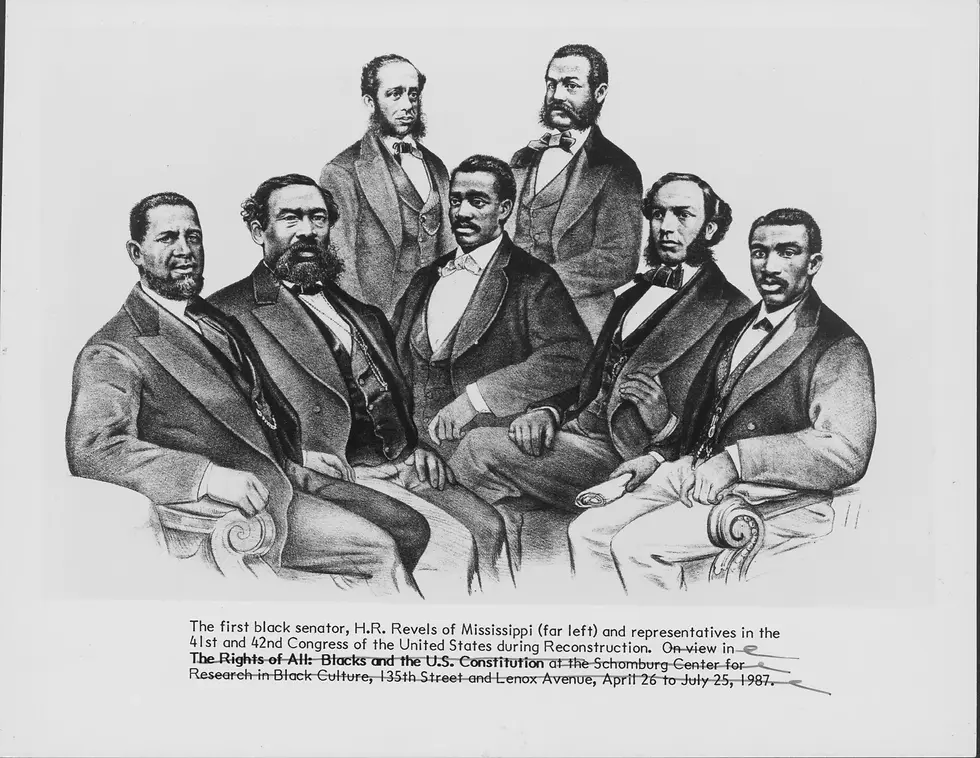
During Reconstruction after the war, there was a brief period in which federal authority intervened in the South to enforce new constitutional protections. For a time, Black Americans participated in political life in ways that would have been unimaginable only years prior. Representation expanded. Legal rights were asserted. The promise of structural transformation seemed momentarily possible.
In certain regions, that promise extended beyond political participation. In January 1865, Union General William Tecumseh Sherman issued Special Field Order No. 15, setting aside roughly 400,000 acres of confiscated Confederate land along the coasts of Georgia and South Carolina for settlement by formerly enslaved families in forty-acre plots. The policy, later remembered as “forty acres and a mule,” symbolized more than temporary relief. Land ownership suggested insulation from dependency and the possibility of economic autonomy within a nation that had long denied both.
Yet this redistribution was short-lived. After President Abraham Lincoln’s assassination, President Andrew Johnson issued broad pardons to former Confederates and ordered the restoration of much of this land to its previous white owners. Thousands of Black families who had begun to settle and cultivate the land were displaced. What had been provisionally granted as a foundation for independence was withdrawn through executive authority.
The episode did more than uproot families. It clarified a developing truth: Reconstruction was not a settled transformation, but an experiment dependent on political protection. Rights could be expanded, but their durability rested on the willingness of those in power to enforce them. Federal authority had intervened, yet it had already shown that its commitments were reversible.
A decade later, that fragility reached its most visible test. The crisis surrounding the presidential election of 1876 exposed just how contingent federal commitment had become. Southern Democrat Samuel J. Tilden won the popular vote, and the outcome of the presidency hinged on disputed electoral results in several Southern states. What followed was not simply a recount, but a national standoff over who would rule the nation.
The resolution came through what became known as the Compromise of 1877. In exchange for conceding the presidency to Republican Rutherford B. Hayes, Southern political leaders secured the withdrawal of federal Union troops from the South, effectively ending Reconstruction enforcement in the region. The presidency of the United States was settled through a bargain that deprioritized sustained federal protection for the newly freed Black citizens. The implications were profound. The legal framework of emancipation remained intact, but its guardians were removed. At the highest level of national power, enforcement of Black civil rights had become negotiable. The message was unmistakable: in America, freedom could be declared without being actively defended.
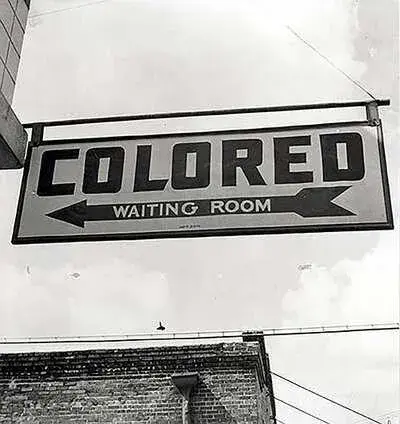
What followed in the South was not an immediate return to slavery, but its evolution through systematic restructuring of dominance. Racial hierarchy, stripped of its constitutional foundation, resurfaced through Black Codes, segregation laws, and later Jim Crow statutes. These policies did not invent a new order, they preserved the old one under new constraints. Central to this reorganization was the restriction of Black political power.
Through poll taxes, literacy tests, grandfather clauses, and widespread intimidation, Black Americans were effectively prevented from voting across much of the South. This ensured that those who had once enforced slavery would not be displaced by those they had formerly enslaved. The ability to live under a system did not equate to the ability to shape it.
For those whose survival instincts had already been sharpened by generations of structural threat, this development reinforced an important lesson. Legal recognition did not guarantee legal protection. Promises could be extended and then quietly buried. For this reason, inherited caution toward institutions as protection was not irrational. It was adaptive.
It is important to acknowledge that while American slavery was undeniably evil, it was also the only period in which Black Americans existed under one singular unified structure of oppression. The plantation created a shared condition. A single environment. A collective survival code shaped by the same fear. But once slavery ended, that unity fractured. Without the plantation as the common environment, Black Americans were no longer united by the same daily experience. Freedom did not create sameness, only divergence. Geography, risk tolerance, opportunity, and unique interpretation of danger began to shape different responses to the same inherited fear.
Although the enslaved were legally freed, many chose systems like sharecropping or forms of economic dependence in the south rather than risk navigating a country that had never proven itself safe. The plantation, however brutal, was familiar terrain. The wider nation was much too unknown and unpredictable. To many, it was not trust in white authority that kept them there, but the belief that known systems, however oppressive, were easier to navigate than unknown ones. For this group, the inherited fear of slavery evolved into a cautious accommodation of white authority not out of loyalty, but out of calculation and familiarity.
To others, survival meant distance. The North represented possibility precisely because it was not the plantation South. If whiteness had controlled the South through terror, then leaving it became an act of psychological resistance. The migration was not simply about finding employment but about redefining proximity to power. For them, inherited fear did not mean adapting to white authority. It meant putting distance between themselves and it.
What had once been a unified survival response began to split into two distinct strategies, Assimilation, and Avoidance. However, despite the split the root fear remained. It was only the expression of that fear that evolved through the next generation.Yet the formal abolition of slavery did not immediately dissolve the racial logic of the country that sustained it. Systems collapse faster than the minds who were conditioned within them. While the legal framework of slavery was dismantled, the generations who were raised under its authority remained alive and already seated in power. The men who drafted new laws, enforced order, and shaped public opinion in the post-war South had themselves been formed within a world where race determined belonging, hierarchy, and humanity.
It is in this sense, slavery was not just a economic institution but a total social order in which skin tone dictated community, status, and proximity to power. When that structure was removed, those who had internalized it did not instantly shed its assumptions. What had once been legally enforced became culturally defended. Racial hierarchy, no longer embedded in the Constitution as property law, reemerged through Black Codes, segregation statutes, and later Jim Crow legislation. These were not new creations born in a vacuum, but reorganizations of a worldview that had shaped the justification for slavery.
Over time, however, a shift occurred. As generations passed and those who had directly experienced and enforced slavery died, the overt legitimacy of that racial order began to weaken. What had once been the unquestioned ruling norm gradually became regional doctrine, then contested ideology, and eventually an increasingly unpopular public position. A system can be dismantled in law in a single moment, but the psychological conditioning it imposes can only fade across generations of a different lived experience. This generational lag is essential to understanding the concept of Inherited Fear.
Just as the descendants of the enslaved inherited adaptive caution through stories, warnings, and social codes, so too did the descendants of the slaveholding class inherit assumptions about hierarchy and belonging. Both sides carried forward environmental conditioning long after the originating structure had vanished. What remained was no longer slavery itself, but its residue expressed through new systems, new tensions, and evolving strategies of survival.
The racial logic of slavery did not disappear, it reorganized. Stripped of its formal legal structure, it was repackaged as an ideology that sought to preserve hierarchy without the language of property. What we now call segregation and white supremacy can be understood, in part, as the ideological descendant of that system shaped by generations raised to see dominance as natural and loss of dominance as threat. For many, the fear was not only of social change, but of social reversal. A world in which those once subordinated might claim control and power in ways that felt destabilizing to those who had long held and weaponized it.
With the legal abolition of segregation through the civil rights movement, the structure of American community life shifted. For the first time in modern history, communities were no longer formally divided by law, but increasingly organized around shared beliefs, values, and political identity. This marked a profound transition. The American dream of a true melting pot.
For generations before, Black communities had been unified primarily by shared environmental danger, a collective memory of threat that shaped common social codes and survival strategies. White communities, likewise, had been organized around inherited assumptions of hierarchy and dominance. These bonds did not come voluntary, they emerged through lived experience.
Integration introduced a new possibility. Black Americans entered historically white institutions, and white Americans entered historically Black spaces. On the surface, this reflected the promise of equality. Communities could now form around ideas rather than imposed racial boundaries.
Yet communities formed primarily around shared ideals differ fundamentally from those formed under shared threat. Fear-based communities are forged through survival necessity; belief-based communities are formed through voluntary alignment. While shared belief can unite individuals intellectually and morally, it does not always replicate the deep cohesion shaped by generations navigating the same environmental dangers.This generational shift helps explain why many integrated communities, though formed with noble and aspirational ideals, struggled with internal instability and uneven growth. The binding force of the country had changed. What once unified groups through shared vulnerability was replaced by shared vision, and vision alone can waver when external pressure intensifies.When communities are forged under shared danger, cohesion is reinforced daily through necessity. Under threat, survival codes are clear. Loyalty is practical. But when communities are formed primarily around shared ideals, cohesion depends upon sustained agreement. Disagreement becomes destabilizing rather than survivable. Vision must constantly be reaffirmed, and when strain appears, fracture follows more easily.
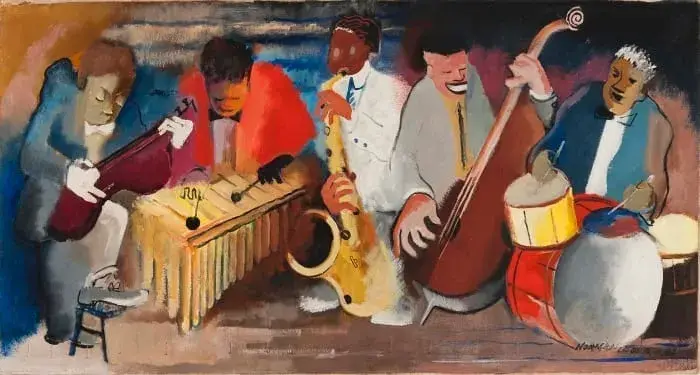
In the decades following integration, historically Black neighborhoods underwent rapid structural transformation and subsequent poverty. Urban renewal initiatives and waves of gentrification reshaped physical spaces under the language of economic progress, often displacing long-standing residents and weakening generational continuity. Cultural forms such as jazz and other expressions of Black art increasingly moved from community-rooted environments into institutional settings, where they were curated, funded, and reframed for broader consumption. What had once emerged from lived survival conditions became sanitized and abstracted from the social realities that produced it.
At the same time, the crack epidemic devastated Black families at a scale that altered generational trajectories. Whether through targeted neglect, failed policy, or deliberate political calculation, the effect was destabilization. Mass incarceration and intensified policing reinforced inherited caution toward authority even as the broader nation proclaimed itself post-segregation and increasingly equal.
Revelations about federal programs such as COINTELPRO further complicated the promise of integration. Conducted by the FBI from the 1950s through the 1970s, COINTELPRO targeted Black political organizations, civil rights leaders, and emerging community movements under the justification of national security. Through surveillance, infiltration, disinformation campaigns, and strategic disruption, it sought to fracture coalitions and neutralize leadership. When these operations were later exposed, they validated long-held suspicions within Black communities that authority could not always be taken at face value. In this light, inherited fear of institutions was not mere paranoia, but historically confirmed caution. Distrust became an adaptive response to contemporary evidence, not simply residue from the distant past.
Meanwhile, new cross-racial political coalitions began to form. White Americans who identified with progressive politics often aligned themselves publicly with Black communities, believing shared ideology signified shared struggle. Yet alignment through belief is not identical to alignment through inherited danger. To believe in justice is not the same as being shaped by generations of survival codes. Empathy can create solidarity, but it does not erase unequal historical conditioning. This distinction introduces subtle tensions within integrated spaces. While some experienced integration as partnership, others experienced it as proximity without shared inheritance. This tension between shared belief and unequal inheritance, between integration and generational memory, has evolved into being one of the central dilemmas of the modern American experience.
In the years following the Civil War, party loyalty often functioned like a last name. A man in Georgia did not simply choose to be a Democrat; he was raised among Democrats, married into Democratic families, read Democratic newspapers, and attended churches where political identity was assumed rather than debated. In parts of the North, Republican allegiance carried a similar inevitability. Political affiliation traveled through households the way accent and custom did. Children learned not only how to vote, but who their people were.
By the early and mid–twentieth century, that rigidity had begun to soften. A factory worker in the Midwest might vote Republican in one election and Democrat in the next without severing ties to his community. A family dinner could include quiet disagreement without signaling exile. Party registration still mattered, but it no longer dictated the entirety of one’s social world. Newspapers were local. Churches were mixed in opinion. A vote did not automatically predict one’s friendships, church membership, or choice of neighborhood. That fluidity did not last.
By 1980, something more consolidated was emerging. The election of Ronald Reagan did not simply shift policy; it revealed a coalition that had been quietly assembling. Evangelical pastors urged congregants toward “moral clarity.” Economic conservatives spoke of free markets as moral virtue rather than fiscal preference. Anti-communist rhetoric framed global politics as a struggle between righteousness and decay. These currents braided together into a shared identity that extended beyond ballots. To belong was to affirm a worldview.
At the same time, liberals increasingly gathered under the Democratic banner, not merely around policy but around a language of rights, pluralism, and social reform. The overlap that once allowed conservative Democrats and liberal Republicans to coexist within the same institutions began to thin. By the late 1980s, knowing someone’s party affiliation often revealed more than their voting record; it hinted at which church they attended, what radio host played in their car, which neighborhood they felt comfortable entering, and which moral anxieties kept them awake at night.
In the nineteenth century, party identity had followed geography. In the late twentieth century, it followed conviction.
Yet conviction alone does not create hardened identity. Identity calcifies when belief becomes emotionally charged and publicly rehearsed. In the 1990s, congressional debates grew sharper in tone. Under leaders such as Newt Gingrich, opposition was framed less as disagreement and more as moral corruption. Language shifted from “policy differences” to “threats to the nation.” Politics began to resemble a contest over legitimacy rather than governance.
Meanwhile, cable television extended the argument into the living room. With the rise of networks such as Fox News in 1996, viewers could choose not only a channel but a narrative. Evening broadcasts no longer simply reported events; they interpreted them through consistent ideological framing. Families in identical houses, on identical streets, could consume entirely different versions of the same day. Over time, repetition hardened perception. Stories reinforced suspicion. Suspicion reinforced loyalty.

When the impeachment of Bill Clinton unfolded, the divide became visible in everyday behavior. For some, impeachment represented moral accountability; for others, it was partisan overreach. Conversations at workplaces and holiday tables grew sharper. Support or opposition began to signal more than a stance on one president; it signaled alignment within a cultural camp. By the end of the decade, party affiliation increasingly shaped where people felt safe speaking freely, which news they trusted without verification, and which neighbors they quietly distrusted.
What had once been an inherited regional habit was becoming a moral boundary.
By the early twenty-first century, political allegiance was no longer something expressed every four years in a voting booth. It appeared on bumper stickers, in yard signs, in hashtags, and in profile pictures framed with campaign slogans. After the disputed 2000 election, conversations about legitimacy entered everyday life. After September 11, flags multiplied on porches and suspicion intensified in airports and neighborhoods. The wars that followed divided households as sharply as they divided Congress. Trust did not fracture all at once; it thinned gradually, conversation by conversation.
With the rise of social media, political identity moved from private conviction to daily performance. A timeline became a referendum. A shared article signaled loyalty. A silence signaled dissent. News was no longer encountered in a common broadcast but curated in algorithmic streams that affirmed existing fears and resentments. Two neighbors could scroll through entirely different versions of the same nation while sitting on the same couch. Belonging became visible.
Public alignment increasingly required visible signals. A black square posted in solidarity of a community. A slogan in a bio. A carefully worded statement released within hours of a national tragedy. In many cases, the gestures were sincere. In most others, they functioned as social currency. It was proof of moral positioning within a community that now measured allegiance in real time. Support could be demonstrated without structural sacrifice. Outrage could be expressed without institutional change. Visibility alone became participation.
Where earlier systems enforced conformity through law and force, modern institutions often secure it through recognition. A party, a network, a church, or a movement signals to its members: You are safe here. We see the danger. We are fighting it. The language varies: patriotism, justice, faith, security, but the emotional architecture is familiar. It echoes the survival codes formed under threat. The institution names an enemy. It names a danger. Then it names itself as the shield against it.
In that environment, loyalty feels protective. To question the institution can feel like stepping outside shelter. Even when results stagnate, even when promises shift, the bond holds — not because it is purely ideological, but because it is emotional. The community experiences reassurance, even though its underlying fears remain intact. Belonging became visible.The instinct that once protected bodies now evolved to protect identity. Inherited Fear once sharpened reflexes against whips, laws, and visible violence. In the modern era, it sharpens reflexes against narratives of cultural erasure, moral collapse, demographic threat, or spiritual decay. The form has changed but the vigilance remains.
Political parties, media networks, and even social movements speak in the language of guardianship. They present themselves as the barrier between their members and chaos. And for communities shaped by generations of real danger, that promise resonates deeply.
The risk is subtle, but real. When fear becomes the organizing principle of belonging, emotional reassurance can quietly substitute for measurable progress. A rally can feel like advancement, even when no policy shifts. A protest can feel like momentum, even when no structure changes. A slogan can feel like security. Students can walk out of classrooms in solidarity. Yet when the noise fades, the underlying conditions that placed the community at risk often remain intact.The legacy of slavery does not survive today in chains or statutes, but in a refined level of alertness, a vigilance passed through story, memory, and caution. That vigilance preserved life. It taught adaptation and calculation. The question now is not whether that fear was justified. It was. The question is whether the reflex must continue unchanged in environments that no longer mirror the plantation or the courthouse of 1877. If survival once required Inherited Fear, it’s next evolution may now require Inherited Discernment. Inherited Discernment does not ask who speaks most fluently about danger, but who truly diminishes the inherited fears in practice. It does not reward the amplification of fear, only the reduction of risk. It preserves memory while always insisting that reflex answer to evidence. Inherited Discernment must now preserve our freedom, or we will remain loyal to whoever speaks the loudest about danger. Especially in an environment where that danger is often rhetorical, amplified, or selectively framed.
This reflex is not confined to politics alone. It surfaces within cultural and creative spaces as well. Artistic communities, like political ones, are shaped by the conditions under which they form. When art emerges from shared environmental danger, it carries density, cohesion, and unspoken survival codes. But when those conditions shift, the organizing principle shifts with them.
In the modern era, the threat is rarely physical. It is economic, institutional, and reputational. Artists navigate funding sources, market expectations, algorithms, and public moral alignment. Visibility can determine survival for the artist. Alignment can determine opportunity. In such an environment, belonging often forms not around shared creative necessity, but around shared anxieties about sustainability and relevance.
The survival reflex that once sharpened itself against overt structural violence can gradually redirect itself toward economic instability or social exclusion. What once ensured physical survival now safeguards belonging and identity. In such conditions, conformity can feel not only reasonable, but easy. Silence can seem calculated. Public alignment can function as protection. When fear becomes the quiet foundation of artistic community, expression risks adjusting itself for survival rather than revealing something true. For this reason, the evolution toward Inherited Discernment must extend beyond politics. It must reach into culture itself. It must ask not only who names danger most convincingly, but which structures meaningfully reduce risk without demanding unexamined loyalty. Memory remains essential. Vigilance remains wise. But reflex must answer to evidence, and belonging must not depend solely upon fear.
The challenge is not to forget the past, but to ensure it does not unconsciously script our allegiances in the present. The plantation no longer stands, but the instincts it manufactured still listens for a master who promises protection.
Comments