
Social Validation Is the New 'Exposure'
A Cultural Exploration Essay by Xander Thomas - For SoundVillage News
I have increasingly noticed lately a contradiction in modern creative culture that nobody really wants to talk about honestly. Modern artistic culture often treats perceived legitimacy as a form of payment
Recently, I saw two gig postings for saxophonists on the Atlanta Gig Page — a large Facebook network of professional musicians in Atlanta.


One was a straightforward restaurant gig: two hours, clear expectations, guaranteed $150, direct audience interaction. The response was laugh reactions. The comments immediately mocked the pay. It was not seen as legitimate by the creative public.
The other posting was far more complex. It was a band gig involving rehearsals, stylistic expectations, political and social alignment, and income dependent on ticket sales, where musicians would hopefully make around $100–150.
Yet somehow, the second gig was viewed as more legitimate, as reflected by the large number of eager responses. To be clear, I have no personal issue with either opportunity. My issue is with the contradictory way the creative community often perceives opportunity itself.
That contradiction revealed something critically important to me about modern artistic culture:
Many creatives are satisfied with emotional compensation long before they are financially compensated.
Ironically, that mindset often feeds directly into the “starving artist” trope itself.
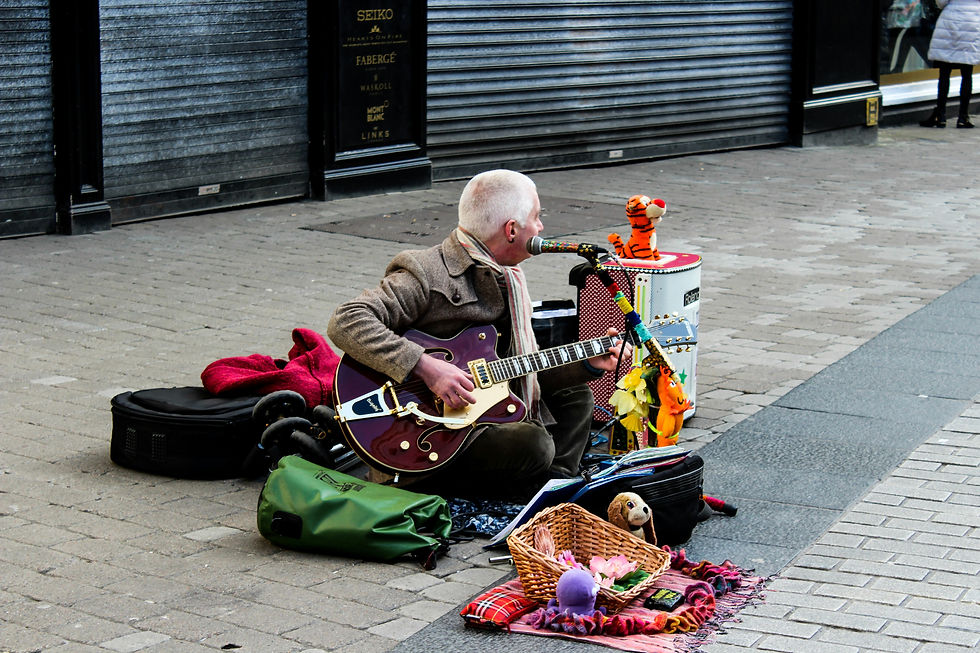
For decades earlier, artists have been manipulated with the phrase:
“The pay is low, but it’s good exposure.”
Nowadays, the language has long since died and evolved.
Today it sounds more like:
“The pay is low, but the big-hitters will be there.”
“It’s one of the biggest venues in the city, it'll be good for your resume
“The pay is low, but you'll be part of the next creative movement.”
In other words, many modern artists are willing to accept poor financial compensation so long as the opportunity provides a sense of perceived legitimacy.
To be fair, that legitimacy can absolutely have value. A respected venue, festival, or creative collective can elevate visibility, networking opportunities, and artistic credibility.
Most musicians would laugh at a random $50 gig. But place that same pay in a respected jazz venue or a prestigious arts festival, and suddenly the economics are reframed psychologically.
Prestige itself begins to feel like part of the compensation.
The artist begins accepting prestige itself as part of the compensation.
That’s the modern version of “exposure.”
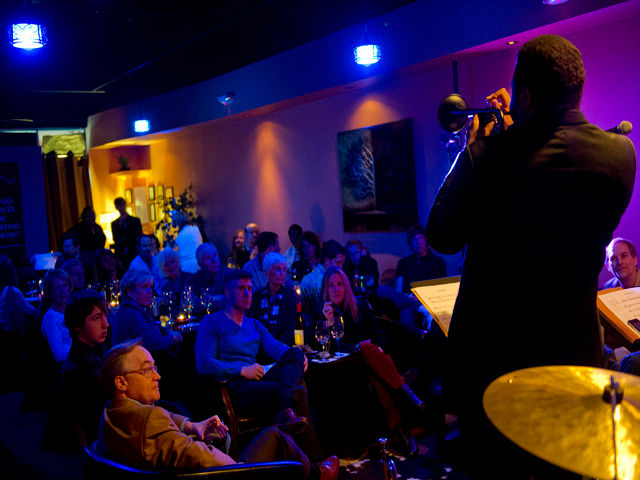
The problem begins when artists start confusing prestige with sustainability.
Personally, I would take the straightforward solo-restaurant-gig over the “maybe $150” band-gig almost every time. Not because restaurant gigs are glamorous, but because one market rewards performance while the other often rewards circumstance.
At a solo restaurant gig, as the entertainer, my ability to connect with people DIRECTLY impacts my income. If I perform well, connect emotionally with the room, and create a strong atmosphere, I can easily turn a $150 base rate into $225 or more through tips alone.
What's even more, I leave with direct access to potential future clients.
One strong performance can lead to weddings, private events, corporate bookings, referrals, and repeat business.
That’s sustainable.
And MUCH More importantly, that outcome is (at least partially) within my control.
Meanwhile, in many band settings, a musician can rehearse for hours, perform extraordinarily well, contribute significantly to the creative process, and still walk away with very little compensation because ticket sales were weak, something most musicians have absolutely no control over.
Even when the room tips well, the money is often divided several ways.
Despite widespread popular belief, many so-called “commercial” gigs are actually much more merit-based than many “artistic” ones.

Artistic spaces also tend to romanticize instability. Poor organization, unclear pay structures, excessive rehearsal demands, and weak economics often become normalized as long as the opportunity is associated with enough artistic prestige.
Entire scenes quietly survive off the emotional desire artists have to feel respected, included, and legitimate.
That’s why I’ve learned one of the most important lessons of my career:
"Remain confident, but destroy your ego."
Confidence allows artists to value their labor, trust their craft, and build meaningful work.
Ego, however, creates dependency.
Ego convinces artists that exclusivity equals greatness, that struggle automatically equals authenticity, and that artistic approval equals success.
Many creatives are no longer creating primarily for people.
They are creating for other creatives.
And that concept fundamentally changes EVERYTHING.
Audiences do not care about scene politics nearly as much as artists believe they do. Audiences care about emotion, atmosphere, honesty, connection, and experience.
That reality has come to shape my entire career.

I’ve performed over 680 shows while having fewer than 400 Instagram followers. Most of my posts barely reach beyond the same handful of people. Somehow, my music is still streamed by over 1.2K monthly listeners on Spotify.
By internet standards, those numbers may not seem impressive. Yet over the course of my six-year career, I’ve earned more than $155K through saxophone performance alone.
All without a massive online presence, major label, or artistic institution carrying me.
Just real rooms filled with real people, consistent performances, and direct connection.
And honestly, those experiences have taught me far more about art than validation ever could.
I love jamming with musicians. I love collaboration, chemistry, and spontaneous creation. But professionally, I’ve learned to become careful about the structures I attach my creativity to.
This isn't at all to say collaboration is bad.... quite the opposite in fact.
The real underlying issue is that a majority of creative systems quietly survive on unstable economics and the human need for social validation. People will convince artists they NEED a band, a collective, a label, or a scene in order to become legitimate.
Often what's buried within those words is a single principle:
“You need us to feel validated.”

You don’t.
In fact, we NEVER did.
At the end of the day, the purpose of art should never be limited to impressing other creatives. True validation comes from within. External validation is temporary at best.
The true challenge of the professional artist is to create something authentic to themselves while still being able to genuinely resonate with other human beings.
That is what defines success as a creative. That also defines the struggle.
The purpose of art is connection.
And the moment creatives collectively stop confusing social validation with genuine success is the moment we all finally become free.

Comments