
When a Tree Falls: Sound, Agreement, and the Creation of Meaning

By Xander Thomas for SoundVillage News
"If a tree falls in the middle of a forest and nobody is around to hear it, does it make a sound?"
Most people answer this age old question almost instinctively.
“Yes.”
“No.”
“Only if someone perceives it.”
But hidden inside the question is a philosophy much deeper than a falling tree.
The question is really asking:
"Does reality exist independently of human agreement? Or do human beings assign meaning through perception?"
The tree is not the point.
Sound is.

Humanity perceives sound through two very distinct categories.
We call some sounds “music.”
We call other sounds “noise.”
But the line between the two is actually surprisingly fragile.
Music is often defined as the art of organizing sound into a form that is agreeable, harmonious, or emotionally meaningful. Noise, meanwhile, is typically defined as unpleasant, unwanted, or disruptive sound.
The key distinction between the two is not existence.
It is judgment.
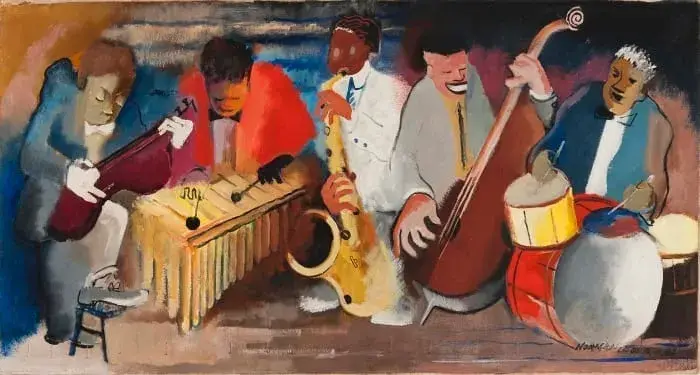
A waterfall crashes endlessly in the wilderness. Birds scream endlessly through the sky. Wind steadily rattles leaves against concrete. A saxophone squeals with life in the hands of a free jazz musician. To one listener, these sounds may feel beautiful, spiritual, and alive. To another, they may feel chaotic and unbearable.
The sound itself has not changed.
Only the perception around it.
The Power of Agreement
Human civilization is built on collective agreement.
Money has value because people agree it does. Borders exist because people agree they do. Language functions because people collectively agree on meaning.
Perhaps “music” works the same way.
A scale is only harmonious because generations of shared listeners agreed it was. Certain rhythms are widely considered acceptable while others are labeled disruptive. Entire genres have historically been dismissed as “noise” before later being embraced as art. This exposes the core contradiction.
The sound never changed.
It was only the AGREEMENT around it that did.
Reading Genesis Through Sound
What if the creation story in the Book of Genesis is not simply a story about the universe being created…
…but a story about humanity creating order through agreement?
Genesis 1 is built on acts of definition:
light and dark,
above and below,
land and sea,
good and not-good.
Reality becomes structured through naming, separation, categorization, and shared understanding.
Then comes the line:
“Let us make man in our image.”
Perhaps this is the moment the story reveals itself most clearly.
If God is interpreted not as infinite existence itself, but as collective human authority, then the statement becomes humanity constructing reality in its own image and attributing that structure to the divine.
In this reading, “God” becomes symbolic of agreed authority — the voice humanity accepts as absolute truth.
Creation becomes the act of defining.

Music, Noise, and Control
This likely explains why certain forms of expression disturb people.
Free jazz. Experimental art. Improvisation. Unfiltered emotion.
These forms reject rigid agreement and structure. They resist being easily categorized or controlled.
Artists like Albert Ayler and John Coltrane pursued sound well beyond the limits of conventional structure. To some listeners, their music felt transcendent. But to those who valued structure and agreement, it sounded like utter chaos.
But again, the sound itself did not change.
Only the listener’s relationship to it.
Humanity lives in cycles. History repeatedly shows that revolutionary art is first heard as noise before society eventually agrees to call it music.
Conclusion
The tree falling in the forest does in fact make a sound.
Human ego simply arrives afterward and interprets what that sound meant.
Music. Noise. Truth. Madness. God.
And perhaps civilization itself is nothing more than humanity collectively agreeing on which sounds are music, and what sounds are noise.
Perhaps… humanity could agree that for sound to be music.. it must envoke emotion, tell a story, and have cultural context… things relevant to every human…. I believe if we as humans could come together and understand John 1:1 …. Perhaps we could understand better The Word and creation of sound…. Without labels, boxes, or societal control.