
When Passion Becomes Work
My father and brother recently landed a plumbing contract in South Georgia. This required them to arrange 3 day work trips to get the job completed. During a family dinner, I asked my brother if he had tried any restaurants or found anything interesting to do while he was down there.
My father interrupted.
“That’s not why we’re there. We’re there to work. We just need to go to the hotel and to work, get the job done and come home.”
I told him that exploring was part of the fun of traveling for work. Work is the excuse. I travel for work all the time. If a job takes me somewhere new, I might as well find a good restaurant or see something while I am there to make it worthwhile.
“That’s different,” he said.
Those two words bothered me because I knew exactly what he meant, even if he didn’t fully. It highlighted our disconnect about the perception of what music is.
My father and brother are both master plumbers. I am a musician.
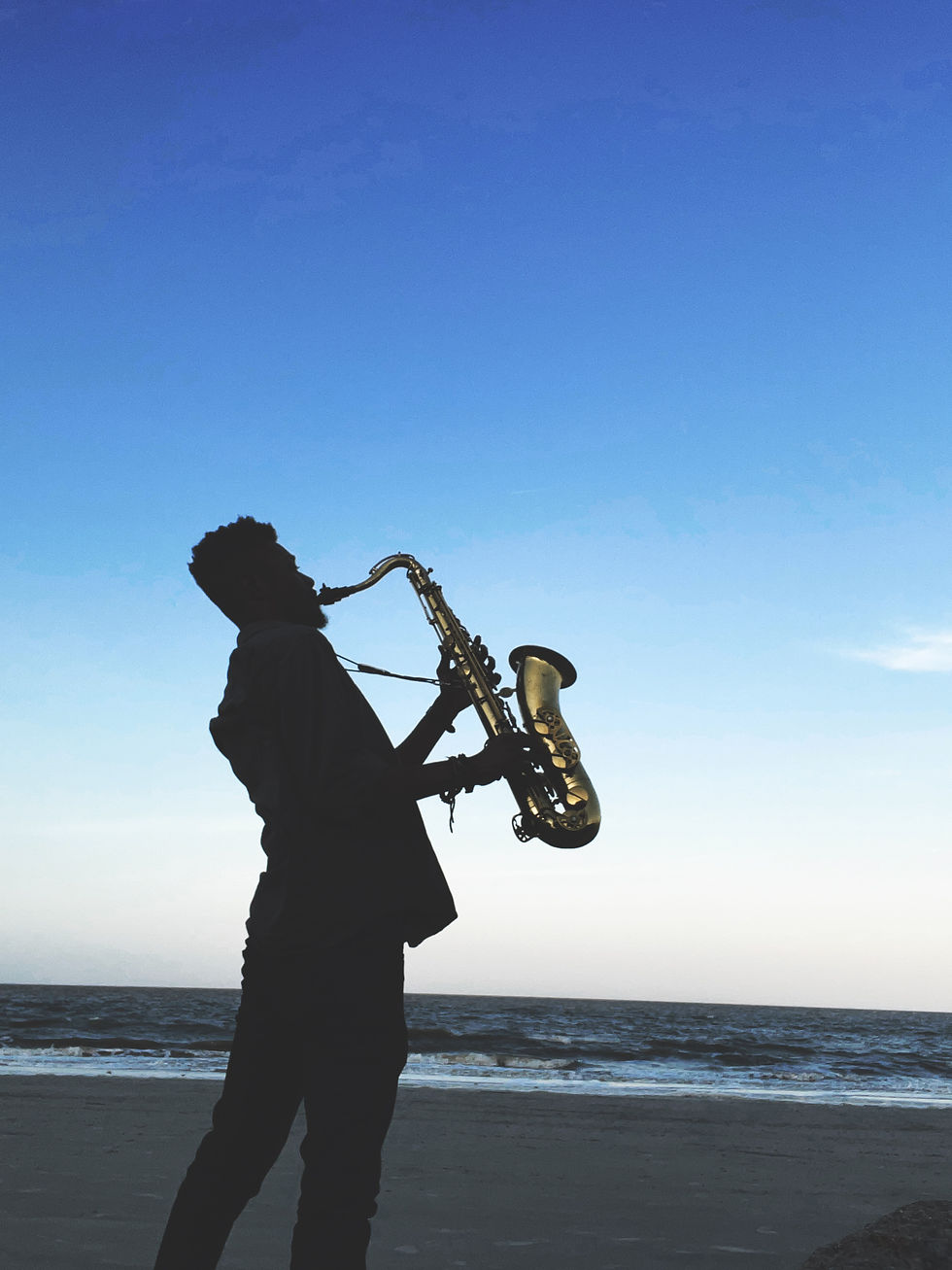
To my father, one of us is traveling for work.
The other one is traveling to play music.
I don't think he meant that to diminish my career at all. In fact, my parents have always massively supported what I do for a career. My father is extraordinarily proud that I have managed to make a living as a musician and stay so busy. In fact, my career seems to have inspired him to pursue music more seriously as he approaches retirement.
But that small exchange exposed something I have felt but struggled to explain for years.
There is a difference between loving something and depending on it.
We are constantly told to turn our passions into careers.
“Do what you love and you'll never work a day in your life.”
It is one of the most persistent fantasies we sell about work: find the thing you would happily do for free, become good enough that someone will pay you to do it, and somehow you will have escaped the concept of work altogether.
Well… I did it.
And I can tell you from personal experience that it does NOT make work disappear.
It makes your passion become work. That distinction matters more than we give it credit.
I grew up in a very musical family. Music represented freedom for generations in my family long before it represented employment. It was something everyone did because we wanted to do it. It was expression, community, identity and escape.
Through my entire life, my dad has ALWAYS consistently played his bass guitar. Whether it was alone in the garage, in church, in a jazz band or in a gospel group, in my 29 years of life, he has always played.
It was his reset, his community and how he expressed himself.
I grew up following his example.
What my father didn’t realize is that he could maintain that relationship with music because he had something else carrying the economic burden of his life.
Plumbing.
Plumbing paid the mortgage.
Plumbing bought the instruments.
Plumbing paid for food.
Plumbing absorbed the stress of customers, schedules, contracts, expenses and everything else required to keep a family financially secure.
Because plumbing had to be useful, music was allowed to be useless.
I don't mean useless as an insult.
I mean something far more valuable.
Music did not have to justify its existence.
A song did not have to generate revenue. A rehearsal did not have to lead to a booking. Playing with friends did not have to become content or forced networking. Becoming a better musician did not have to increase anyone's market value.
Music could simply be music.
I had that relationship with it once before too.

When I was a student, my primary responsibility was school. In grade school, band class was my time to be free from everything else happening. In college, I could spend hours practicing because I wanted to improve. I could sit around with musicians and talk about records. We could jam. We could experiment. We could obsess over some obscure musical idea that would never make us a dollar. Even though I was in music school, the elements of music was the freedom from the elements of school.
Then, after four years of college, I graduated. Eventually, music became responsible for keeping me alive, and the relationship fundamentally changed.
My saxophone became equipment. Not my outlet.
A performance became a booking. Not a chance to be heard.
A venue became a client. Not a community center.
A song became repertoire. Not a shared language.
Driving to another city became business travel. Not an excuse to hang out with my closest friends. A Saturday night became an available date on a calendar. Not a day to relax and forget about work.
My ability to play became something I had to assign a monetary value. Not a natural byproduct of living life.
None of this means I stopped loving music.
It means love was no longer the only thing being asked of it.
That is the part I believe people leave out when we romanticize turning passion into profession.
Passion asks:
"What do I want to create?"
Profession asks:
What does somebody need badly enough to pay for?
Sometimes those questions have the same answer.
Sometimes they don't.

The professional musician learns to play the song he would never choose because the bride requested it. The chef cooks when he is not hungry. The photographer takes pictures of someone else's vision. The writer meets a deadline when there is nothing particularly urgent inside them waiting to be said.
Professionalism means doing the thing even when the feeling that originally drew you toward it is absent.
That is what makes it a job.
There is dignity in that.
There is also a cost.
I believe when your passion becomes responsible for your survival, failure begins to mean something different psychologically.
I notice this most clearly in the way I respond to criticism.
I once enjoyed being critiqued as a musician. Criticism meant there was something else to learn. There was more to improve upon.
Now criticism of my saxophone playing can feel strangely personal.
If someone criticizes my writing, I become curious.
If someone tells me a chapter drags, I want to know where. If a character does not make sense, I want to understand why. I can listen because I am still allowed to be a developing writer.
Criticize my saxophone playing and my mind can hear something entirely different.
"You are supposed to know how to do this."
"People pay you to know how to do this."
"Are you actually as good as you claim to be?"
"You are supposed to know how to do this." The criticism has not necessarily changed. The stakes have.
A flaw in something I do for pleasure is an opportunity to improve.
A flaw in the skill responsible for paying my bills can feel like a threat to my competence. That is what happens when identity, passion and livelihood collapse into the same thing.
There is nowhere for failure to land without hitting everything else.
For a while, I tried to escape that pressure without leaving music.
I learned flute.
I romanticized the idea of walking into a jam session where I wouldn’t be introduced as a professional saxophonist. I would not have to be impressive. I could simply be a mediocre flautist trying to get better.
It sounded liberating.
But there was an immediate problem.
I could change instruments, but I could not stop being a professional musician.
My ears came with me. My standards came with me. My musical knowledge came with me.
Even my own expectations of professionalism followed me into the room.
I wanted permission to be a beginner again, but I was trying to become a beginner inside the very world where I had spent over a decade establishing expertise.
Eventually, without consciously deciding to, I found that permission somewhere else.
Writing.
When life becomes heavy now, I rarely reach for my saxophone.
I open the Notes app on my phone. I open a blank screen on Instagram.
And I write.
Sometimes poetry. Sometimes creative nonfiction. Sometimes essays. Sometimes a rant that I simply need to get outside of myself.

Nobody is waiting for it.
Nobody booked me for it.
Nobody cares if I finish.
There is no invoice attached to the final paragraph.
Writing is allowed to be useless.
And because it is useless, it is freedom.
In 2023, I took a writing class at Georgia State University. Nobody in that classroom cared about my music career. I rarely mentioned it. I didn’t have to. I was simply another writer. Not the best. Not the worst. I loved that.
The other writers in that room inspired me. Their feedback made me better. I could write something that did not work and return the following week without feeling like my professional legitimacy had been called into question.
For the first time in a long time, I was allowed to be unfinished.
It was only after recent reflections that I realized that this is EXACTLY what my father wants from music.
For years, my dad has talked about wanting to create a space where musicians could gather regularly, play straight-ahead jazz, practice together, exchange ideas and talk about the state of jazz without the pressure of an audience.
And for years, the idea made absolutely no sense to me.
We already have jam sessions. If you want to practice with other musicians, go to a jam. If you want to get better, practice. If you want to study something, study it. If somebody hires you to play, go work the gig. Why would I want to spend my free time doing more of what I already do for work?
In my mind, I always translated his idea into something like plumbing.
Imagine me telling my father that plumbers needed a special place to gather after work. No customers, service calls, or invoices. Just a room full of master and amateur plumbers practicing plumbing with each other, exchanging techniques, sharing stories about pipes and spending the evening discussing the current state of plumbing.
Maybe they could bring in younger plumbers and teach them about the history and traditions of plumbing. Maybe every Saturday night they could get together and replace water heaters recreationally. The entire concept sounded absurd to me.
If my father spent all week plumbing, why in the hell would he want to go somewhere after work and do MORE plumbing for free?
And then I realized that the absurdity was the point.
That is how I see music.
When my father talks about musicians getting together to play without the pressure of an audience, I hear professionals getting together to work without customers.
He doesn't.
He hears freedom.
My father can spend an entire day dealing with pipes, crawl spaces, customers, project managers, contracts and job sites and then come home and pick up his bass because the bass belongs to a completely different part of his life.
Music is not where he goes to work.
Music is where he goes when the work is over.
And suddenly I understood why his idea of musical community appealed to him so much.

My father has always had something I lost.
His passion never had to feed him.
Because he had plumbing, music remained a place where he could experiment, socialize, improve for no particular reason and surround himself with people who simply enjoyed doing the same thing.
And the strangest part is that I realized I don't actually think his desire is ridiculous at all because I want the exact same thing. Just with writing. I would happily sit in a room full of writers and share unfinished work. I would happily listen to someone else's story and tell them what I thought. I would happily let another writer critique something I made.I would happily talk about structure, characters, essays, poetry and the state of writing with people who cared about it. No client, invoice, or audience required.
The very thing that sounds absurd to me when I imagine doing it with musicians sounds exciting when I imagine doing it with writers.
That is when the difference finally became obvious. Plumbing is my fathers trade Music is my father's passion. but for me,
Music became my trade.
So what was left to remain my passion? That is why the phrase “turn your passion into your career” now feels so incomplete to me.
There is nothing inherently wrong with doing what you love for a living. I am grateful that a skill I learned in childhood and spent years developing has allowed me to support myself. There are freedoms in my career that many traditional jobs could never give me.
But monetizing a passion does not preserve your relationship with it in stone.
It fundamentally changes the terms.
Once something has to pay the electric bill, it cannot always wait for inspiration.
Once customers are involved, your desires are no longer the only desires that matter.
Once your competence becomes your product, criticism can carry economic and psychological weight.
What no one told me is that once your escape becomes your occupation, you may eventually need somewhere to escape from your escape.
Maybe that is why so many people spend their lives searching for the thing they love, while people who successfully monetize the thing they love sometimes find themselves desperately searching for something else.
We need spaces in our lives where nothing is being extracted from us. Where nothing is expected from us. Something that does not have to scale. Something we can be bad at. Something that does not become a personal brand. Something that does not need an audience. Something whose value cannot be measured by whether somebody will pay for it.
My father had plumbing so music could remain passion.
I deviated from my father and brother and made music my plumbing.
For the last few years, I thought that meant I had lost something.
Maybe for a moment, I had.
But I also found myself opening the Notes app. Opening Google Drive. Opening Instagram Stories and typing until whatever was sitting inside of me finally had somewhere else to live.
And somewhere between rants, unfinished poems, half-written stories and essays literally NOBODY asked me to write, I discovered the thing that my career had quietly taken from music.
Freedom. Passion.
If music became my trade,
writing is my music.


Comments